

Holy Disruption
On Jesus, Martin Luther King Jr., and Twin Cities Worship Services

Most people (the late Charlie Kirk and his disciples excepted) respect the legacy of Rev. Dr. Martin Luther King Jr. It’s not difficult to mine the mountains of his publicly spoken and written words and find inspiring quotes that challenge us to live into the best version of our collective selves.
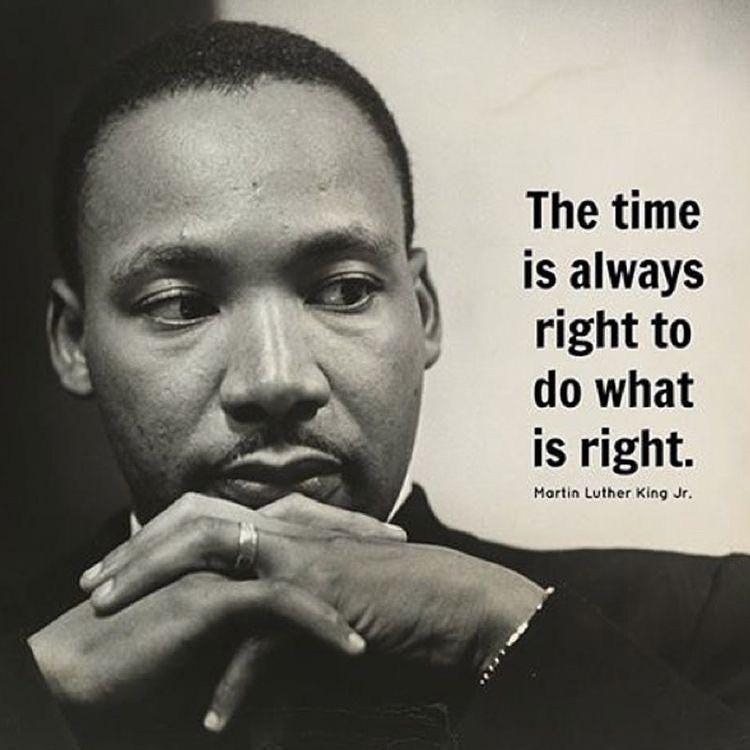
But it’s no secret that, upon his assassination, Dr. King was a very polarizing, unpopular figure. He was viewed as an agitator and nuisance who’d begun turning his attention from the widely condemned segregation of the Jim Crow south to the racism that permeated northern metropolises and the ethical blight of the war in Vietnam. The common sentiment was that he’d crossed the line.
We’re mostly fine with prophetic voices that don’t kick up too much dust in our own house.
Everyone loves table flipping Jesus except the people who were in the temple.
It took me awhile to wake up to the antisemitic assumptions inherent in a lot of Christian rhetoric and theology, but it’s pretty plainly there.
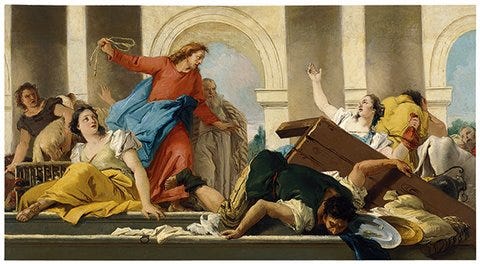
One of the stories that helped drive this point home for me was the infamous “Cleansing of the Temple” as recounted in Matthew 21:12-13, Mark 11:15-17, Luke 19:45-46, and John 2:13-16. Jesus enters the holiest site in the world of the Jewish diaspora (a place of worship!) and begins turning over tables in protest.
For most Christians, this doesn’t pose much of an issue. Outside of the desire for a photo op at the Western Wall (no judgement! I’ve done it myself!), we don’t have much of an attachment to the Jerusalem Temple.
But for many of the people whose very identity is intertwined with the culture once centered around this now destroyed holy site, the idea that someone would come to a sacred site after a march/demonstration (which is what the Triumphal Entry was) and then conduct a disruptive protest (even if no people were injured) is inherently offensive.
And we don’t have to imagine how Christians would react to something similar happening to them.
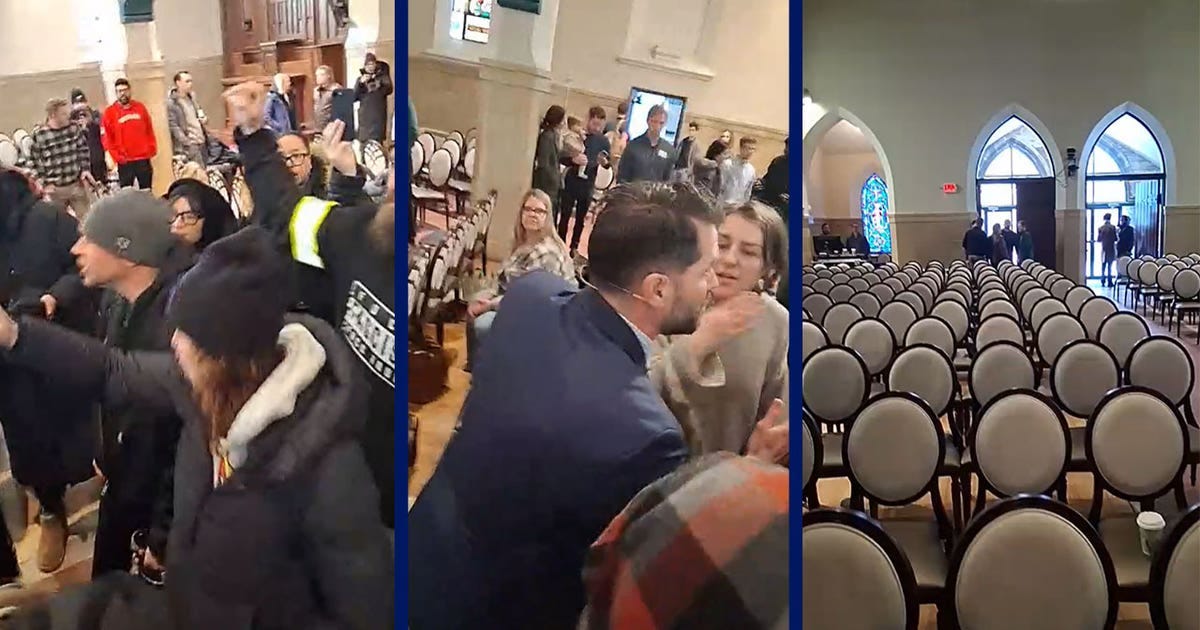
Yesterday, protestors disrupted a worship service at Cities Church in St. Paul Minnesota. Christian voices from across the theological and political spectrum have weighed in with responses ranging from lament to outright condemnation of those protestors. The audacity of invading a sacred space during a time of worship is not hard to find noxious.
And this brings us back to Table Flipping Jesus™.
We’ve made our peace with Table Flipping Jesus™ because obviously Jesus had to be responding to some sort of injustice. The default assumption within Christianity is that whatever Jesus does is right. However, this assumption can sometimes lead us away from critical thinking.
A theologizer must grapple with certain questions, like why was it right for Jesus to do this?
A common explanation for Jesus’s temple temper is that the money changers were exploiting people by charging exorbitant exchange rates, or that they were inflating the prices of sacrificial animals. It’s not hard to see antisemitic stereotypes being employed to justify Jesus’s disruption in this sacred space.
But the text doesn’t say that.
That’s an interpretation. To be clear, we are all interpreters (or, at least, recipients of interpretations). But it’s important to remember that interpretations do not necessarily tell the whole or original story.
For instance, this particular interpretation might obscure the fact that the people whose business Jesus disrupts in the temple were performing a necessary function. People from around the Jewish world would come to Jerusalem for pilgrimages and festivals, often from distances too far to bring the animals required for sacrifice. In order to allow these people to participate in proper worship, they would need a way to procure sacrificial animals, and they would need to make sure people had the proper currency.
This interpretation fails to tell us why Jesus would cause such a disruption in this site of worship without us assigning greed to people who may have just been doing their job.
Unless we are willing to cede the ground to antisemitic stereotypes about Jewish people being inherently money hungry, I think it’s important that we entertain other possibilities about what may have been motivating Table Flipping Jesus™.
To do so, it might be helpful to place Jesus back in his Jewish context.
Of the four gospel accounts included in the New Testament, two are careful to note how it is that Jesus of Nazareth was born in Bethlehem in Judea. Luke uses a census to bring a Nazarene family to Judea, and Matthew uses the threat of mass slaughter from Herod the Great to turn a Judean family into refugees to Egypt who then settle in Nazareth.
But, in Luke’s account, Mary and Joseph aren’t hiding from Herod at all. In fact, days after he was born, they have their baby dedicated in the Temple that Herod has been giving an Xzibit “Pimp My Ride” level facelift for decades. (Herod the Great was notorious for his building projects, and it’s widely thought that he did this as a means of securing his legacy.) While Mary, Joseph, and Baby Jesus™ are there, something interesting happens. When Baby Jesus™ is dedicated in the Temple, two REALLY old people (who may have been old enough to have vivid memories of what the Temple was like before Herod put his fingerprints all over it) see this baby and celebrate the Lord’s salvation & Jerusalem’s “redemption.”
So, of the two gospels that talk about Jesus’s birth, one starts with Herod the Great out to have Jesus killed from the jump. The other with Jewish people looking to have Jerusalem redeemed from Herod. And, in the synoptics (Matthew, Mark, and Luke), Jesus is relatively scarce in Jerusalem after that until the Table Flipping Jesus™ scene in question.
Between these two events, Herod the Great dies. His “kingdom” is split up. One of his sons (Herod Antipas) has John the Baptist (Jesus’s cousin) executed. At least one gospel account (Matthew 14:13) notes that Jesus mourns this. That’s traumatic. The son of the dude who’s haunted him since birth just offed his cousin. (Imagine being born an Arab-American under Donald Trump’s first Muslim ban only to grow up and see Donald Trump Jr. order your cousin’s execution because someone begged for their head.)
The next time we see Jesus mention Herod, he’s callin’ him a fox. Basically sayin’ he ain’t scared. Jesus ain’t got no nice words to say about that dude. And, when Jesus makes his way back to the temple that Herod’s daddy put his stamp on, he starts cuttin’ up & callin’ it a “den of robbers.”
I think there’s a chance that Jesus is talking specifically about herodians when he says “den of robbers.” In a similar fashion to the way that a lot of what is perceived as criticism of America is really criticism of the Republican Party or the MAGA movement, it’s worth trying to hone in on exactly who or what Jesus is targeting when he quotes from the prophet Jeremiah in calling God’s house a den of robbers.
People named Herod had taken a lot from him by this point. His childhood. His cousin. They even put their name on the only place he could offer sacrifices. I do not think Jesus liked them folks. I do not think he respected the legacy of Herod the Great. He clearly didn’t think favorably of his son Herod Antipas. And it’s tough to imagine he was fond of the people who made their living supporting the Herodian Dynasty. It was the Herodians who collaborated with the Romans for political stability. And it was the Herodians who had control of the marketplace and political functions of the Jerusalem temple. Jesus may have been carrying some “F—Bad Boy as a staff, record label, and as a m——n' crew And if you wanna be down with Bad Boy, then f— you too” type energy to the Temple that day.
Very shortly after this episode, Table Flipping Jesus™ is arrested and put on trial. One account has him tried by none other than Herod Antipas during the ordeal. And Jesus doesn’t even bother answering/acknowledging him during the affair.
From beginning to end… Jesus ain’t rock with Herod(s) or anyone who did.
And one could reasonably argue that it is this one act of disruption that seals his fate on the cross.
Jesus was publicly tortured and executed as an insurrectionist. And this happens after he causes a scene in a holy place.
When we question why Jesus may have been right to cause the scene he did in the temple, we give ourselves a rubric for discerning when disruption is holy and when it is not.
If Jesus was right to flip tables in the temple, we cannot presume that places of worship are automatically off-limits for disruption. We must consider why places are targeted for disruption.
(One question the traditional interpretation of Jesus’s cleansing of the temple fails to answer is why Jesus didn’t disrupt any of the traditional, rival markets that existed in places like the Mount of Olives.)
People once called Dr. King’s ethics into question for the way he deployed children in demonstrations, perfectly prepared to ignore the fact that Dr. King was actually revealing something rotten in our communal ethic & soul as children were greeted with fire hoses and police dogs.
If Jesus was indeed causing a scene at the temple because he felt that the tendrils of empire had corrupted what was supposed to be a holy place, then we must consider what motivates disruption each and every time we are prepared to comment on or condemn it.
Cities Church in St. Paul was not randomly targeted for disruption.
One of the pastors listed on their website (David Easterwood) is also listed as an active field director for U.S. Immigrations and Customs Enforcement (ICE).
In a metropolitan area that has been rocked by the killing of George Floyd, the assassinations of Melissa & Sam Hortman, and the killing of Renee Nicole Good at the hands of an ICE officer (to name a few tragedies), organizers are not prepared to take their foot off the gas as far as protests and demonstrations go.
If there is any truth to the reports that (even some of) the organizers of the protests identified as Christians, it stands to reason that they would find the notion of agents empowered to kill citizens in “self-defense” serving as spiritual leadership inherently offensive and corrupt. There is absolutely no way to reconcile the narrow way of Jesus of Nazareth with the killing of citizens in service of rounding up suspected undocumented immigrants. Not in “self-defense.” Not as a matter of “law & order.” It does not reflect the way of Jesus in any way, shape, or form.
Yes, the idea of disrupting worship services is offensive and destructive.
But, when our worship has been corrupted, disruption might be the most Christlike thing we can do.
Even if it gets us crucified.
I like playing with words. So that’s what I do. Whether it be with tweets, videos, essays, sermonic presentations, Bible studies, podcasts, or speaking engagements of other sorts, I’m always trying to figure out how to provoke an image in a seeker with some combination of words.
If you’ve enjoyed any of the words I have to offer, check out my book Theologizin’ Bigger: Homilies on Living Freely and Loving Wholly wherever books are sold!

Oh, this was so, so good. The connections you make are spot on!
I'll always be thankful for Dr. Amy-Jill Levine for pointing out those antisemetic blind spots so many of us Christians have.